Home Placement Contact
Student Portals

Check out different online courses offered by ADIT

Check out the latest video lectures by experts of different domains.


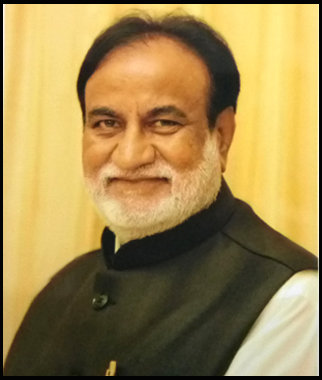
Chairman's Message

Education is said to be the transmission of knowledge, culture and civilization.
Read More...
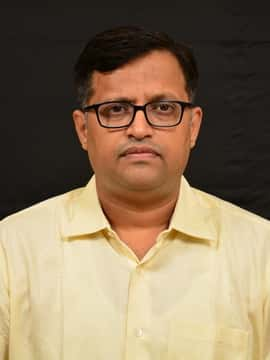
Principal's Message

It gives me immense pleasure to greet and welcome you all on behalf of the entire ADIT family.
Read More...
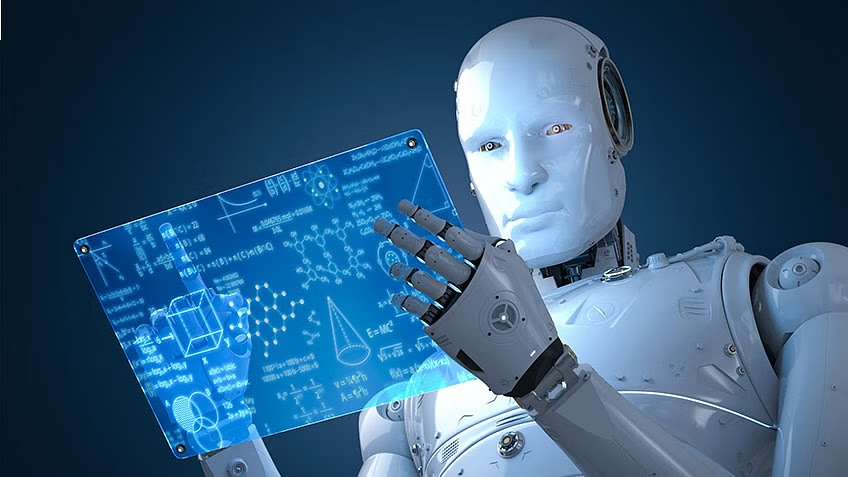

Department of Information Technology


Artificial Intelligence & Data Science

Vision
    Impart quality education to produce creative and ethical engineers, to instil professionalism, problem solving skills and potential research.

Mission
  • Educate the students with latest technologies to update their knowledge in the field of Artificial Intelligence and Data Science.
  • Provide skill based education to master in problem solving and analytical skills to enhance their niche expertise to enable industrial knowledge.
  • Provide conducive environment to support value based ideas of young minds for innovations and start-ups.

Program Outcomes [POs]
  • Engineering knowledge: Apply the knowledge of mathematics, science, engineering fundamentals, and an engineering specialization to the solution of complex engineering problems.
  • Problem analysis: Identify, formulate, review research literature, and analyze complex engineering problems reaching substantiated conclusions using first principles of mathematics, natural sciences, and engineering sciences.
  • Design/development of solutions: Design solutions for complex engineering problems and design system components or processes that meet the specified needs with appropriate consideration for the public health and safety, and the cultural, societal, and environmental considerations.
  • Conduct investigations of complex problems: Use research-based knowledge and research methods including design of experiments, analysis and interpretation of data, and synthesis of the information to provide valid conclusions.
  • Modern tool usage: Create, select, and apply appropriate techniques, resources, and modern engineering and IT tools including prediction and modeling to complex engineering activities with an understanding of the limitations.
  • The engineer and society: Apply reasoning informed by the contextual knowledge to assess societal, health, safety, legal and cultural issues and the consequent responsibilities relevant to the professional engineering practice.
  • Environment and sustainability: Understand the impact of the professional engineering solutions in societal and environmental contexts, and demonstrate the knowledge of, and need for sustainable development.
  • Ethics: Apply ethical principles and commit to professional ethics and responsibilities and norms of the engineering practice.
  • Individual and team work: Function effectively as an individual, and as a member or leader in diverse teams, and in multidisciplinary settings.
  • Communication: Communicate effectively on complex engineering activities with the engineering community and with society at large, such as, being able to comprehend and write effective reports and design documentation, make effective presentations, and give and receive clear instructions.
  • Project management and finance: Demonstrate knowledge and understanding of the engineering and management principles and apply these to one's own work, as a member and leader in a team, to manage projects and in multidisciplinary environments.
  • Life-long learning: Recognize the need for, and have the preparation and ability to engage in independent and life-long learning in the broadest context of technological change.
Program Educational Outcome [PEOs]
  • To formulate, analyse and solve engineering problems with strong foundation in mathematical, scientific, engineering fundamentals and modern computing practices through advanced curriculum.
  • Analyse the requirements, realize the technical specification and design the engineering solutions by applying Artificial Intelligence and Data Science theory and principles.
  • Demonstrate technical skills, competency in AI and promote collaborative learning and team work spirit through multi-disciplinary projects and diverse professional activities.
  • Equip the graduates with strong knowledge, competence and soft skills that allows them to contribute ethically to the needs of society and accomplish sustainable progress in the emerging computing technologies through life-long learning.
Program Specific Outcome [PSOs]
  • Understand, analyse and develop essential proficiency in the areas related to Artificial Intelligence and Data Science in terms of underlying statistical and computational principles and apply the knowledge to solve practical problems.
  • Implement Artificial Intelligence and Data Science techniques such as search algorithms, neural networks, machine learning and data analytics for solving a problem and designing novel algorithms for successful career and entrepreneurship.
  • Apply the skills in the areas of health care, education, agriculture, intelligent transport, environment, smart systems and in the multi-disciplinary area of Artificial Intelligence and Data Science.
Department News

Connect with us

Follow us on social media and be the first to find out about our announcements and Events!

Subscribe our Newsletter